MAVERICKSMEDIA GUIDE

How to Evaluate an SEO Agency in Toronto

Compare SEO providers by transparency, technical ability, content quality, local relevance, reporting and realistic expectations.

MavericksMedia visual dashboard

Start with the business requirement

Compare SEO providers by transparency, technical ability, content quality, local relevance, reporting and realistic expectations.

Before selecting a provider or platform, write down the customer problem, core services or products, information the website must explain and actions you want visitors to take.

Compare the work, not just the headline

Review relevant examples, the proposed page structure, content responsibilities, mobile experience, technical foundations and how changes are handled. Ask what is included, what is excluded and who owns the accounts and assets.

Plan for after launch

A website or SEO project should include a practical handover plan. Confirm who will update content, renew domains and licences, manage backups, review analytics and request future improvements.

Next steps

MavericksMedia can review your requirements and recommend a suitable scope. Explore the dedicated service page or contact the team for a project discussion.

How MavericksMedia can help

Every business starts from a different place. We can review your current website, priorities and resources, then recommend a practical next step based on the work required.

Talk to MavericksMedia about your project →

Look for specificity

A strong SEO proposal identifies target pages, search intent, technical dependencies, content requirements, local signals and reporting measures. It explains why each activity is relevant to the business and how success will be evaluated.

Ask how the agency handles implementation, content approvals, link acquisition and changes to existing URL or canonical structures. The answers should be clear enough to become part of the agreed scope.

Keep reporting transparent

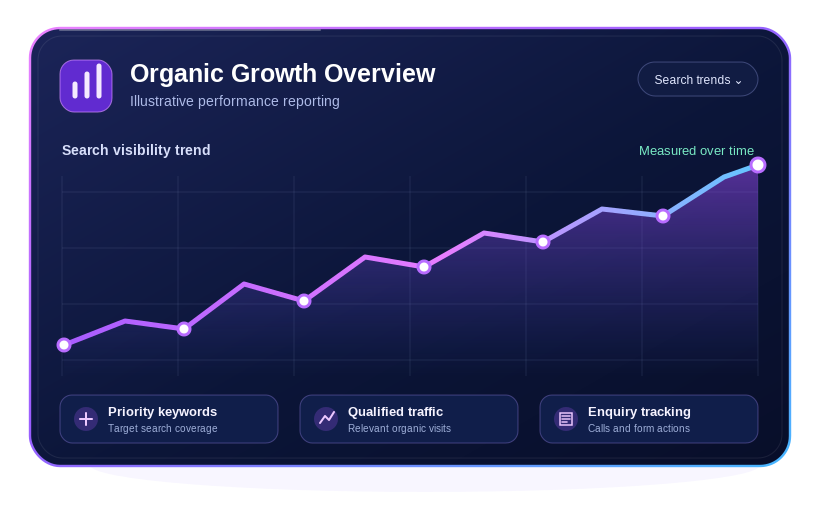
Google Search Console, analytics and website administrator accounts should remain accessible to the business. Reports should explain the date range, metrics, completed tasks, important changes and planned work.

No agency can control every ranking factor. A reliable partner sets expectations honestly and adapts strategy as evidence changes.
Understand what will happen first

Not every recommendation should be implemented at once. Ask which issues block crawling or conversions, which pages have the clearest commercial opportunity and which activities depend on new content or development. A ranked roadmap is more actionable than a long undifferentiated audit.

Confirm how often the strategy is reviewed and how the agency will adapt if search demand, competition or business priorities change.

Make the reporting useful to the business

Ask for reporting that separates work delivered from performance observed. A monthly report should identify the pages and queries being worked on, technical changes completed, content published, important Search Console trends and the next priorities.

Where possible, connect organic activity to meaningful enquiries or sales events. The goal is not to make a report look busy; it is to help the business understand what is improving and what needs attention.