ONGOING WEBSITE CARE & LOCAL OPERATIONS
Website maintenance in Kitchener-Waterloo that protects the service experience after launch
Businesses in Kitchener-Waterloo, across software and AI, cybersecurity, quantum research, fintech and insurance, advanced manufacturing, robotics and automation, health technology and research, rely on websites for enquiries, customer information, bookings and sales. A maintenance plan should be based on how the website is used and what could interrupt it: outdated software, failed forms, vulnerable plugins, slow pages, expired certificates, broken integrations or missing backups.
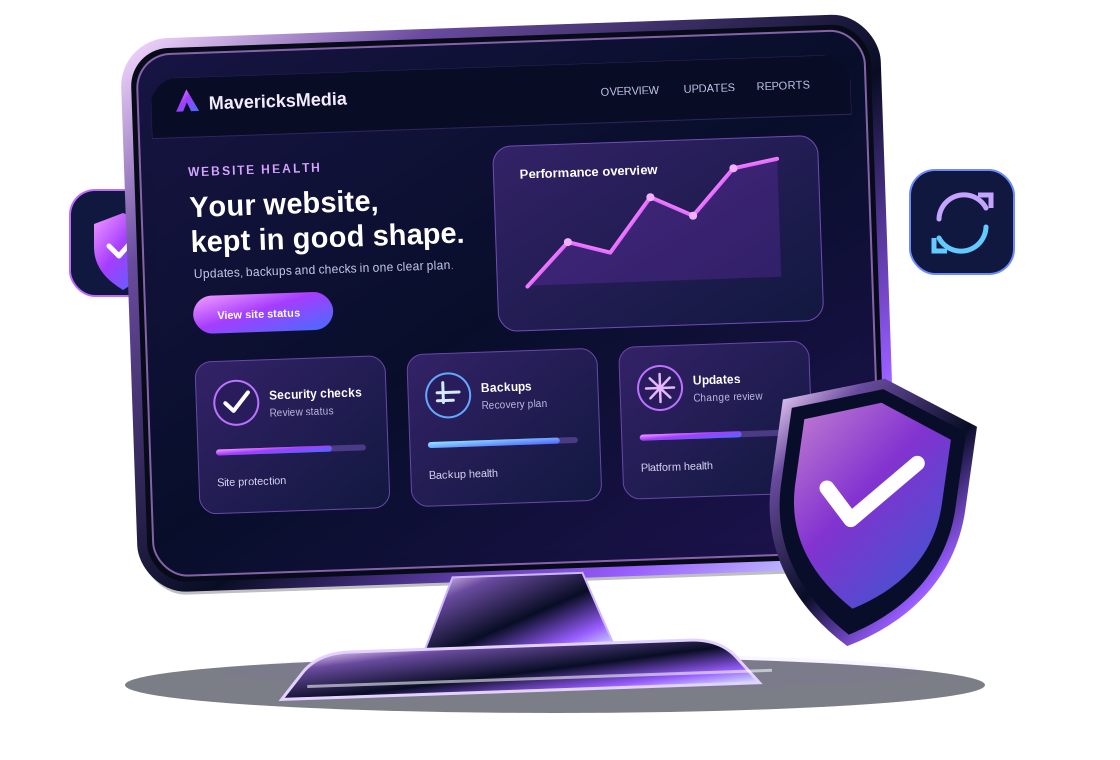
For organizations serving Downtown Kitchener, Uptown Waterloo, the Waterloo Research and Technology Park and nearby Waterloo Region communities, website support can include core, theme and plugin updates, backup checks, uptime monitoring, malware review, broken-link checks, form testing and performance improvements. WordPress maintenance should also include a rollback plan and a way to confirm that updates have not changed important page layouts or customer journeys.
We define the response process, maintenance window, access responsibilities, reporting and escalation route before work begins. This keeps recurring support practical and transparent. We do not describe an automated scan as a complete security audit; higher-risk changes or incidents are scoped separately.
Connected applications, customer portals, data dashboards and workflow tools can link product, user, integration and operational data.
✦Availability priorities
For software and AI, cybersecurity, quantum research, fintech and insurance, advanced manufacturing, robotics and automation, health technology and research, identify whether enquiries, bookings, customer accounts or transactions are the most critical website actions.
✦Recoverability
Agree backup retention, restore testing and rollback windows for teams serving Downtown Kitchener, Uptown Waterloo, the Waterloo Research and Technology Park and nearby Waterloo Region communities.
✦Support ownership
Connected applications, customer portals, data dashboards and workflow tools can link product, user, integration and operational data. Define who approves updates, receives incidents and owns changes outside routine maintenance.